My career in computing was triggered by two small butterfly events seven years apart. Looking back after 40 years, it seemed preordained, but I almost became a doctor instead of a computer engineer.
The first one was in the summer of 1984. I had just finished my 10th standard exams and was looking forward to a relaxing few weeks of cricket, volleyball, badminton, and hikes. Yeah, that was how I relaxed.
But my father, in his infinite wisdom, had other ideas. Out of nowhere, he decided that it was time I learned a new skill. I think he had already been planning it for a while, and when he presented it to me, it was fully formed and ready to execute.
He proposed that I should learn the valuable skill of typing and shorthand.
You heard that right. In those days, when these were skills considered necessary for an administrative career to become a secretary, he intuited that those skills might come in handy for being just more than that.
Unsurprisingly, none of my friends, classmates, or cousins had attended typing school ever. When they found out, they pitied and mocked me, saying, “आता काय सेक्रेटरी होणार?” (“Are you going to be a secretary now?”).
But there I was, cycling my way to the PB Typing Institute across from Pune Railway Station every afternoon. Coincidentally, the institute was run by a Parsi couple. As you will find out in later stories, Parsis and I have a very deep interconnected relation. 😀
I was, of course, the youngest person in my class. All the other students were girls in their late teens or mostly women in their early twenties. They took one look at this scrawny kid, who at fifteen was barely four feet tall, and immediately thought that I was in the wrong place.
I convinced them that yes, I indeed was there to learn both typing and shorthand, and they sniggered and went back to their typewriters. After a bit of orientation by the teacher, I rolled in a fresh sheet of paper and started my first lesson—typing “asdf;lkj” on the home key row.
The butterfly had flapped its wings.
A year later, as I was close to finishing up 11th standard at St. Vincent’s High School, one day our teacher, Mrs. Kulkarni, walked into class and announced, “Boys, line up outside. I am going to show you something magical.”
We boys, of course, loved any opportunity to get out of class and wander around the school. And this looked promising. So we dutifully lined up and walked to a new lab across from the biology lab.
Unbeknownst to us, the school had received two BBC Micro personal computers earlier that year. This was a gift from the Queen of England’s educational charitable trust. They had gifted hundreds of these computers to schools in India under the Computer Literacy Among School Students (CLASS) program, and our school had received two of those magical machines.
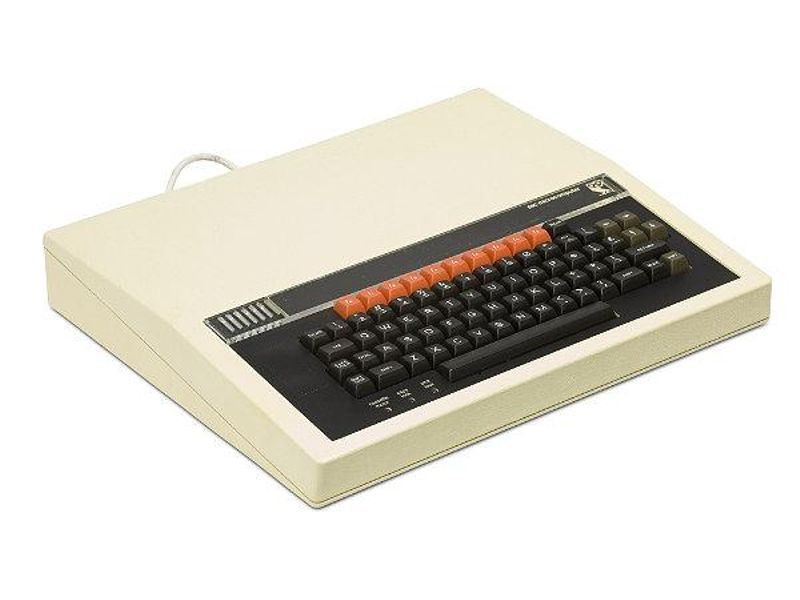
As we lined up in the lab, Mrs. Kulkarni explained what a computer was and then had everyone start entering their names on the keyboard to demonstrate a simple name-sorting program. There were a few students ahead of me in the line, and they were taking their time pecking away at the keyboard one letter at a time. At my turn, I sat down, took one look at the keyboard, and promptly touch-typed my name at lightning speed.
Mrs. Kulkarni did a double take and said, “How did you do that? You know typing?”
I grinned back at her and nodded my head. As realization sank in, she promptly had me type the names of the rest of my friends in line, saving her a lot of time and questions.
As I entered the final name, she then “ran” the “program” to sort names visually.
As we all stared at the vertical list of names on the screen, the first name to start magically moving on the screen was mine.
The butterfly had settled on a flower.
That one interaction was enough for Mrs. Kulkarni to give me control of the “computer lab.” I received her set of keys, and I could go there after classes whenever I wanted. Strangely, I was the only one who messed around with these machines for many weeks until other students also showed any interest.
For me, this immediately grew into an obsession as I pored over all the manuals and scouted out all the books on BBC BASIC in Manney’s bookstore near my school. I remember the hours I stood in the bookstore, painstakingly copying BASIC programs into my notebook. I couldn’t afford these books, and my father had yet to find out about my obsession. He was my book Santa. Mr. Manney was my other mentor – not asking me to buy books, instead, just letting me read them end to end standing hours in his bookshop. I met him again many years later at a party at his house and I reminded him of this and thanked him profusely. He merely smiled in his enigmatic way and said, “Well, I’m glad to see that turned out well.”
My latest venture, Appmosis Investing offers Options Trading Classes to help earn you regular income. Sign up now for the latest introductory class and get started with making weekly or monthly income. I teach these classes weekly. And if you are under 25 years of age, these are completely free.
My first BASIC program was that old chestnut—convert Fahrenheit to Celsius. We had learned the formula in Physics class, and I was scribbling away in my notebook under my desk, away from Despo’s eyes. (Despo, aka Mr. Deshpande, was our Physics teacher). It took a couple of iterations, but when it finally ran successfully, I was ecstatic. This was how the future was supposed to be. It was crystal clear to me at that moment.
After exhausting all the manuals and programs I could find in books and writing my own, I became pretty proficient at BASIC. Enough so, that I was actually asked by Father Misquitta, our school principal, to conduct a “class” for my “teachers” in the summer vacation after 11th grade.
Here was a surreal sight.
I was standing on the teaching podium in our class, and arrayed before me were a few of my teachers: Mrs. Kulkarni, Mrs. Sibal, Mrs. D’souza, Mr. Deshpande, Mrs. Lagad, and even our math teachers Mr. Khanapure and Mr. Shankarnarayan.
Blimey.
I launched into my spiel on BASIC, and my teachers, thankfully, sat up and listened. They probably also recognized the future and appreciated the little kid showing them how to navigate towards it.

As I finished the final year of high school, I scored well enough in my final exams to start applying to all the top engineering and medical schools in Pune. My parents, both being doctors, wanted me to become one as well.
But I had other ideas. I had heard of this new computer engineering college called the Pune Institute of Computer Technology.
PICT.
Those four letters changed my life completely.
 Gautam Godse